
LocoNet | Master Switch
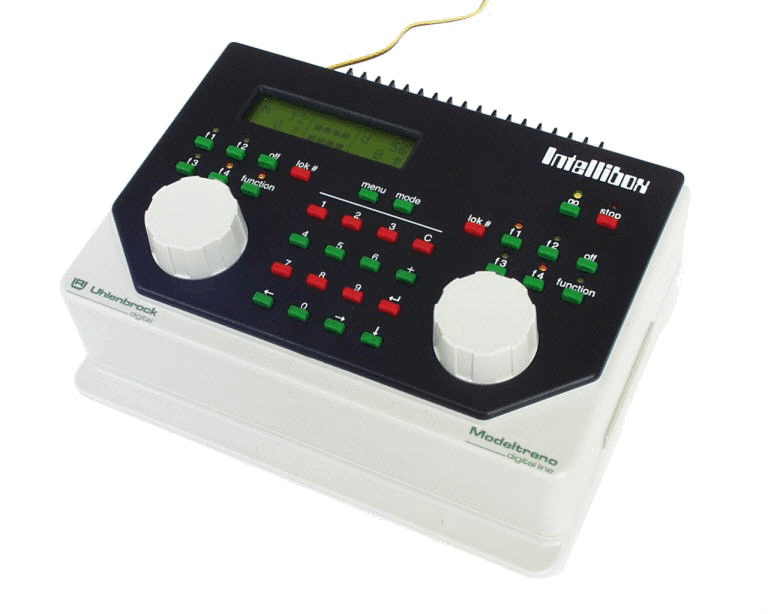
I still use an Intellibox Classic, and functionally it has held up very well. The weak point for me has always been the feel of the built-in buttons, especially for emergency control.
Most of the time I run trains through Rocrail, so I rarely touch the Intellibox itself. But when I do, it is usually for one of two commands:
- Stop (
OPC_GPOFF) - Go (
OPC_GPON)
Those are exactly the commands you want to access quickly and confidently.
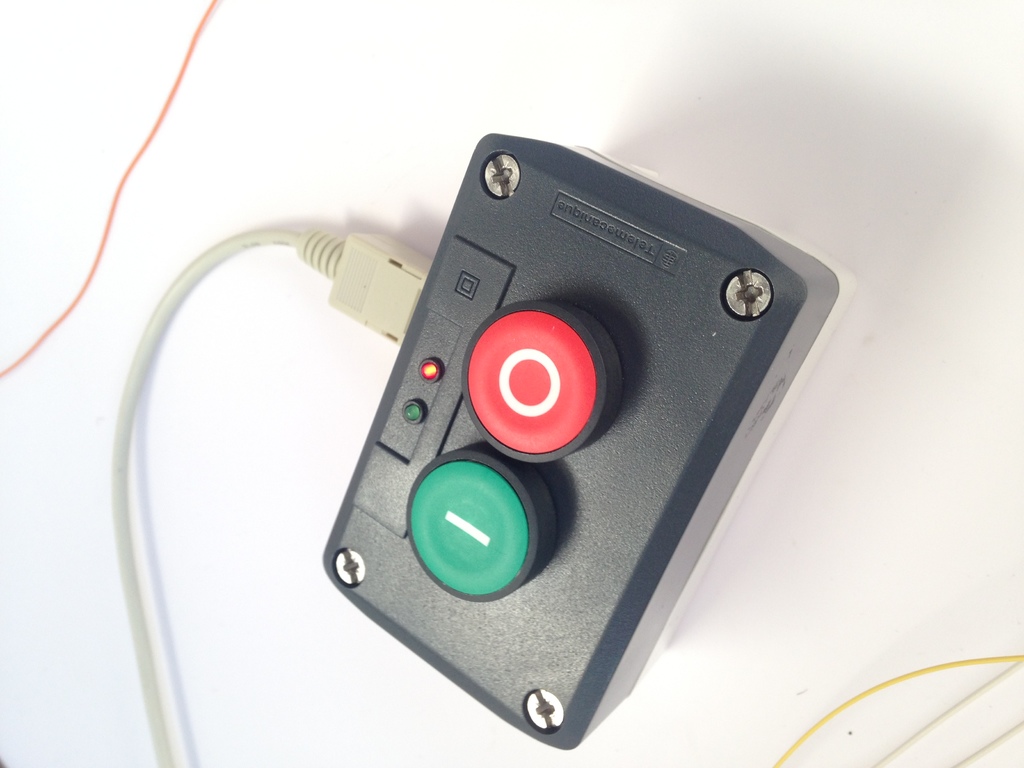
To make this more practical, I built a portable LocoNet master switch: a dedicated handheld unit that can trigger Stop/Go from anywhere around the layout (within cable length).
The goal was simple: make the most important command path physically obvious, robust, and always within reach.
Why build a dedicated master switch
A separate switch unit gives a few practical advantages:
- faster emergency stop access while moving around the layout
- less dependence on a single desk/control location
- clearer physical interaction for guests or helpers
- reduced wear on the Intellibox front-panel keys
Build overview
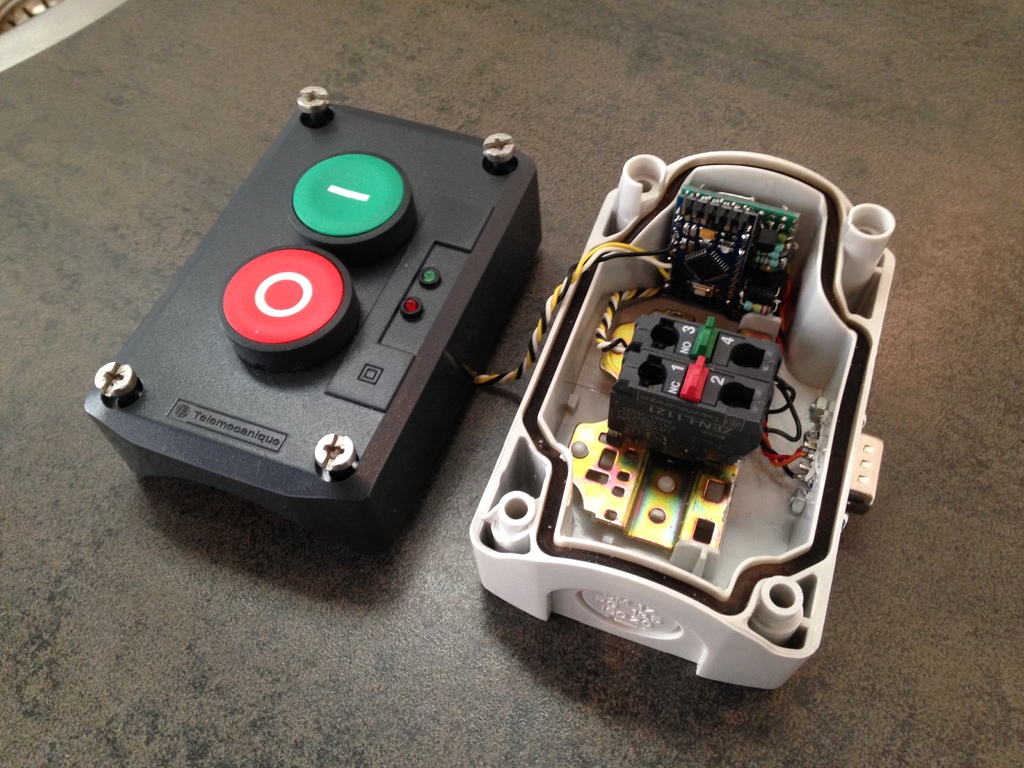
I started with an enclosure found at a local thrift store and built the electronics around it.
Main components:
- Arduino Pro Mini as controller
- red/green status LEDs
- LocoNet interface based on Peter Giling’s work
- DB9 connector using the CGA DB9 LocoNet wiring standard
I used Peter Giling’s CGA documentation and his CGA50 LNet IO interface design as the technical base.
Firmware and behavior
The firmware is intentionally straightforward:
- detect button presses cleanly
- transmit Stop/Go LocoNet opcodes reliably
- provide immediate LED feedback for state indication
Keeping logic simple makes the device predictable, which is exactly what you want for a master safety control.
Build gallery
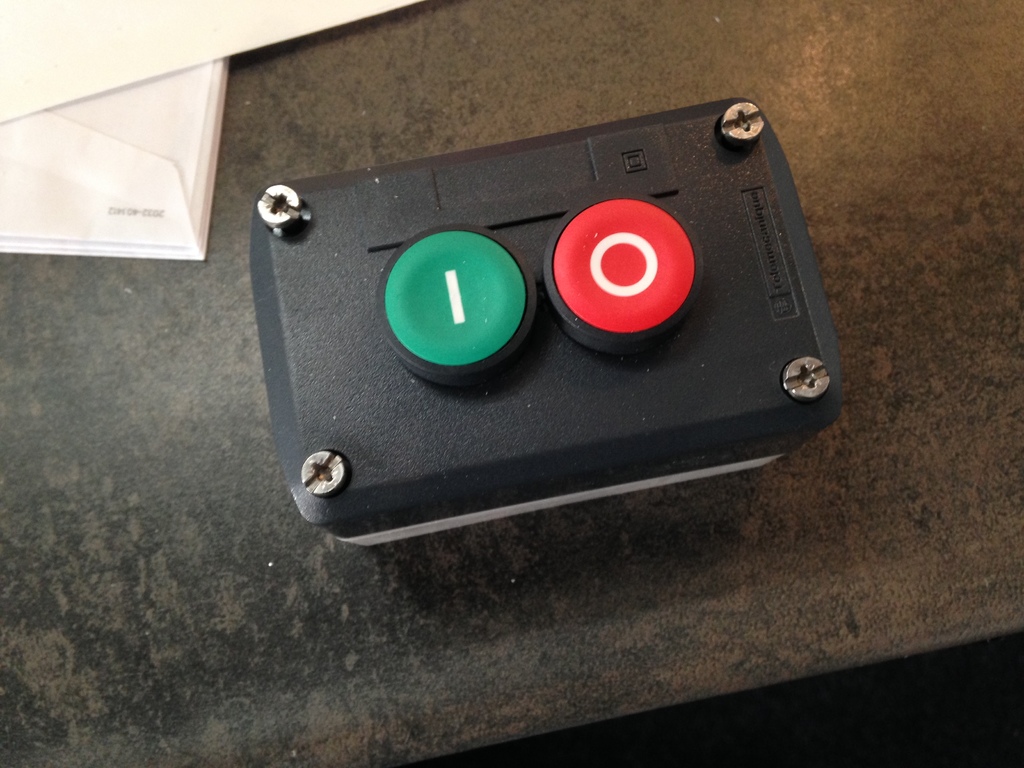 The enclosure as I found it at the thrift store.
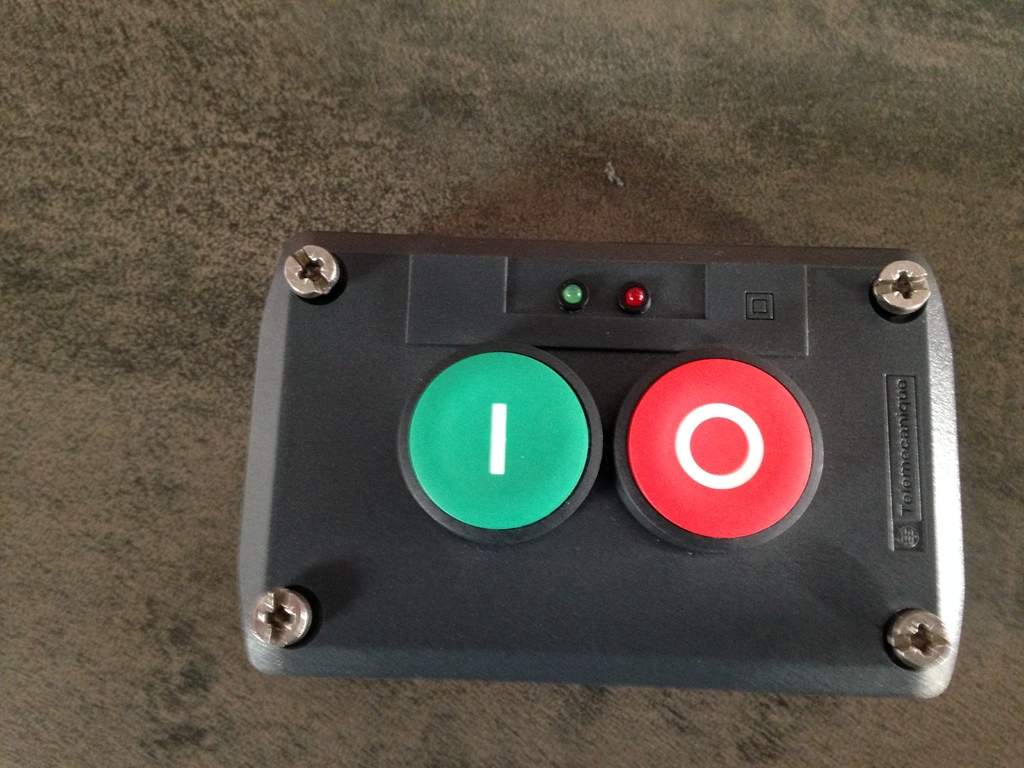 Added a red and green LED.
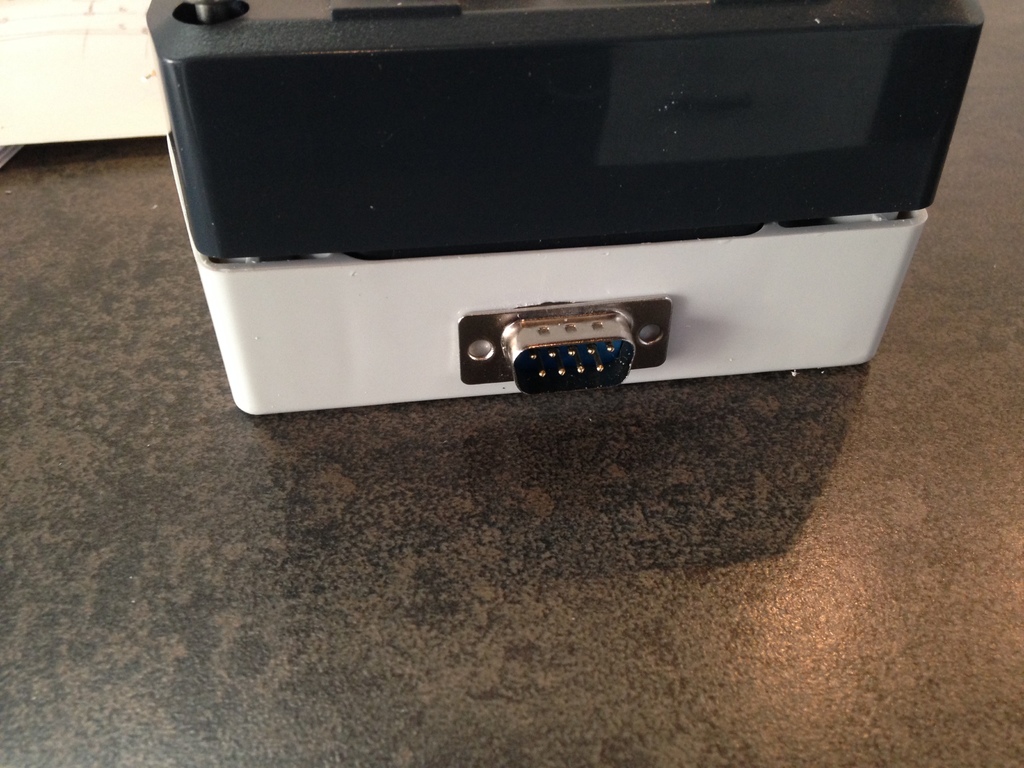 Using the CGA DB9 LocoNet standard by Peter Giling (Modelspoor Groep Venlo).
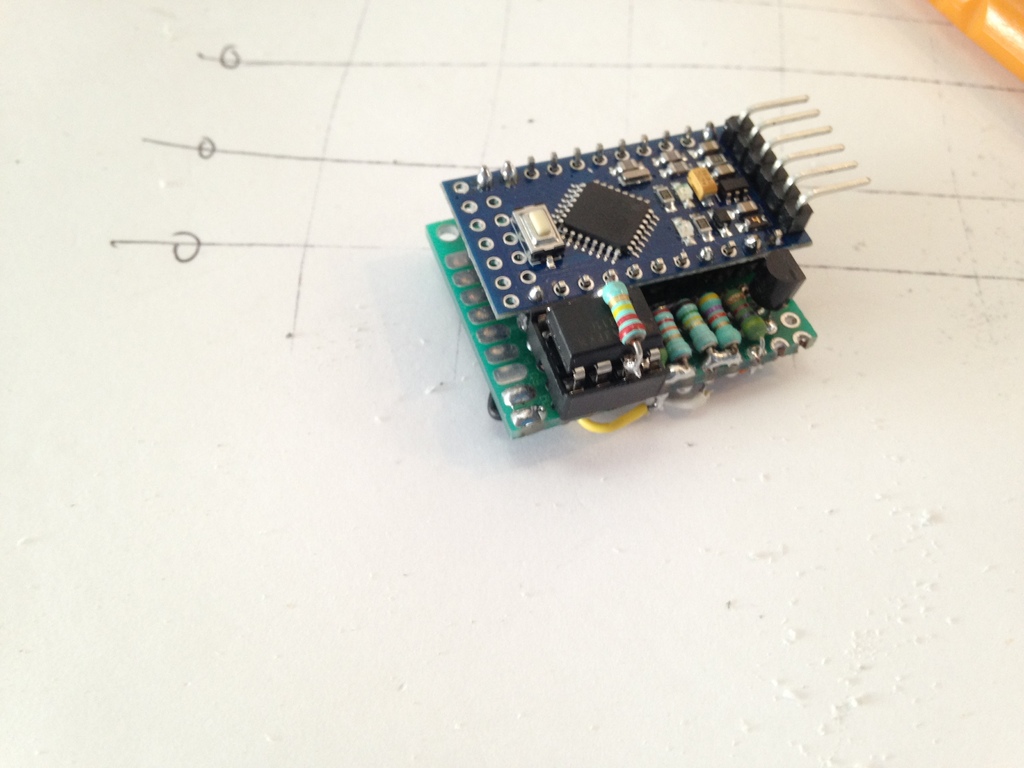 An Arduino Pro Mini with Peter’s LNet IO interface design.
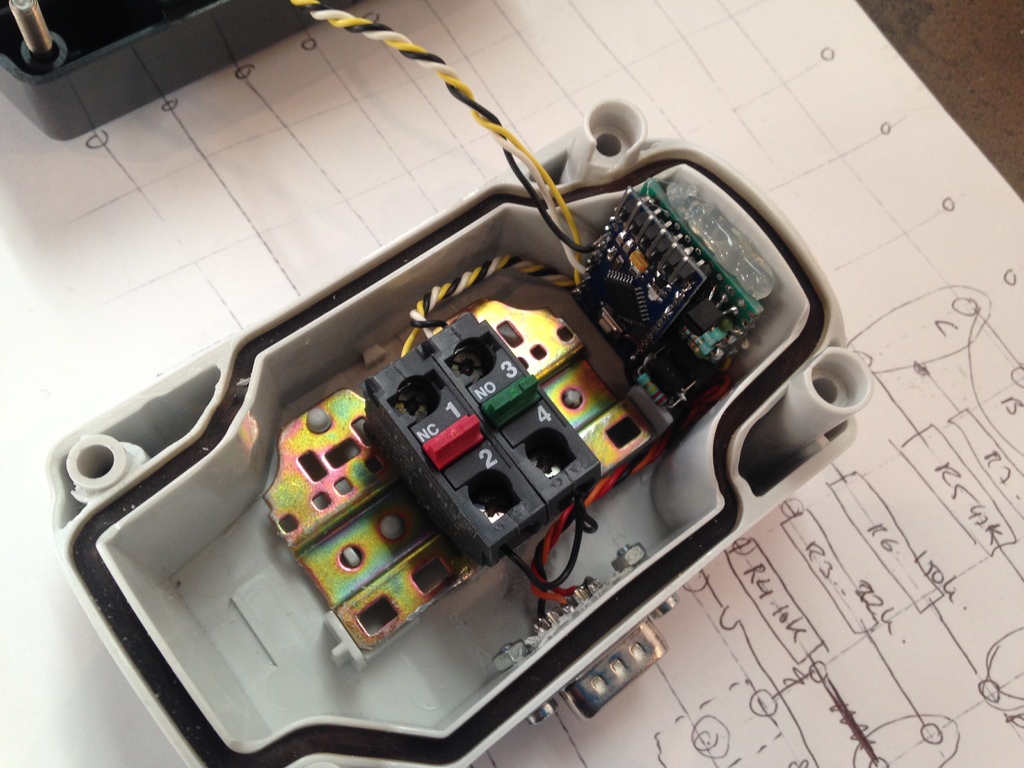 The interface PCB is pressure-fit; I added hot glue for extra mechanical security.
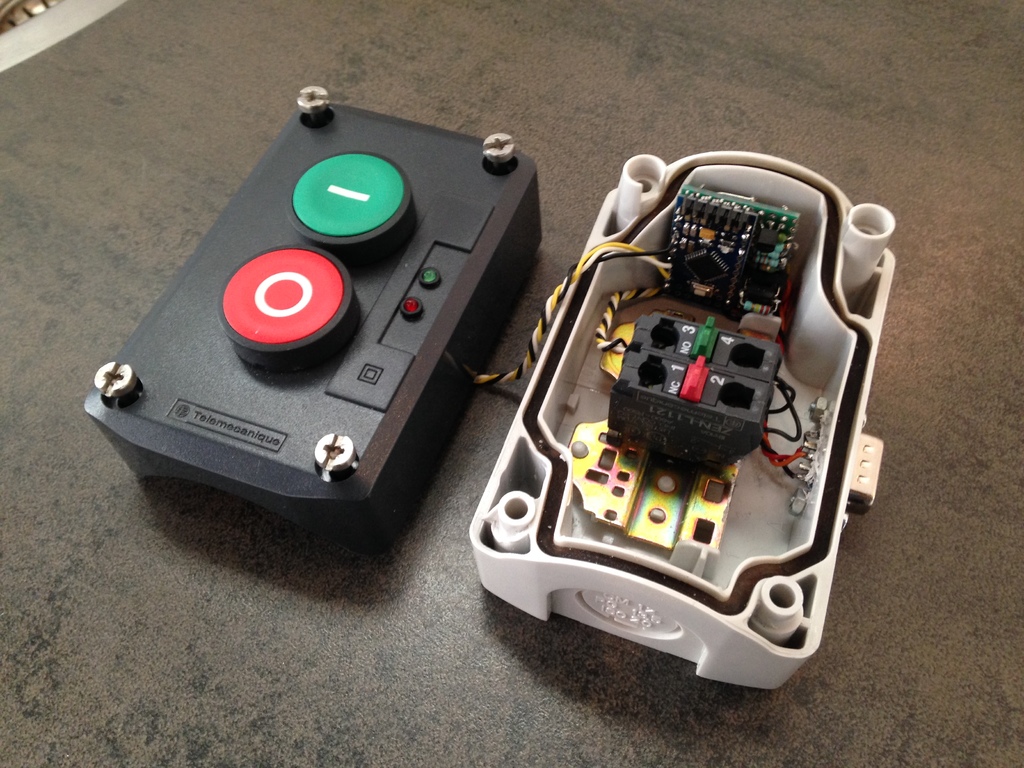 Ready for firmware.
Source code
The code is available on GitHub if you want to build your own version.